Authentication Innovation Company-Wide Design System Enterprise Security Platform Healthcare Collaboration 5-Step Design Framework
← Back to Work

Authentication Innovation

Role: Product Designer · Timeline: 2025 · Bitdefender MSP, Cluj-Napoca

Stepping outside my design brief to propose, research, and help ship Passkeys across Bitdefender's MSP platform. A faster, more secure authentication method that eventually expanded to the main Bitdefender platform.

Why Authentication Needed Rethinking

Authentication is the front door of any security product. For a cybersecurity company like Bitdefender, the irony of a friction-heavy or phishable login experience isn't lost on anyone. Passwords combined with 2FA codes were still the standard, but the landscape was shifting.

This wasn't a brief that landed in my queue. I had been following the Passkeys rollout across major platforms for close to a year, paying attention to how adoption was going and whether anyone was rolling back. When I felt confident the technology was mature enough, I brought the idea to the table.

Password
Password
Phishable
Password + 2FA
Password + 2FA
Better, but slow
Passkey
Passkey
Fast. Secure. Simple.

Proactivity, Process, and Impact

This project has three distinct threads that are all equally part of the story. The initiative to propose it, the collaborative process to build it, and the outcome that went beyond what any of us expected.

01 - Proactivity

I spotted it before it was a requirement

For almost a year I tracked Passkey adoption across platforms like Apple, Google, and GitHub, watching for rollback signals, reading implementation postmortems, and forming a clear point of view. When the time felt right, I brought the proposal to the Engineering Director and Product Manager on the MSP team.

02 - Process

Small team, fast thinking

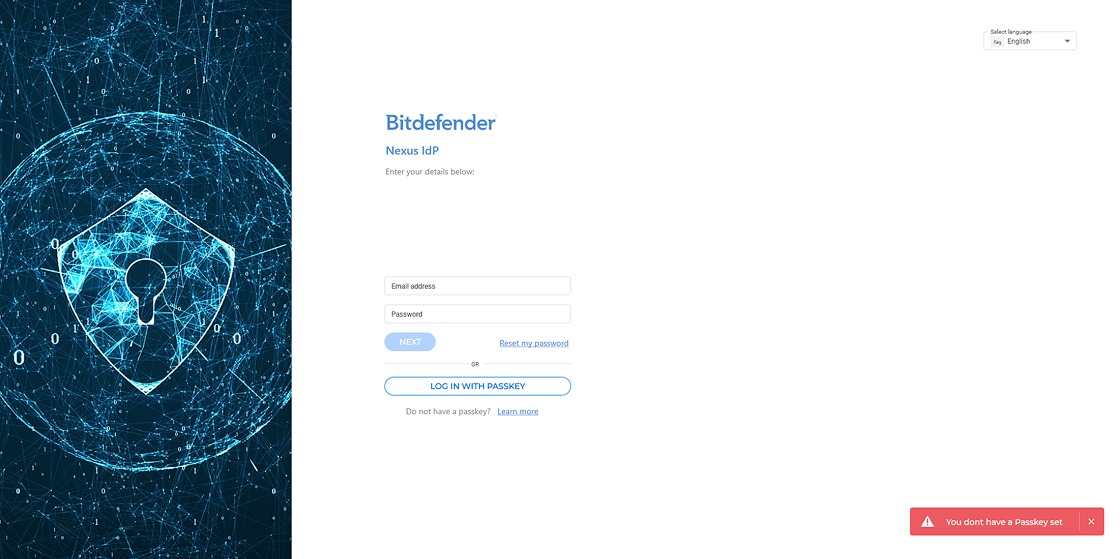
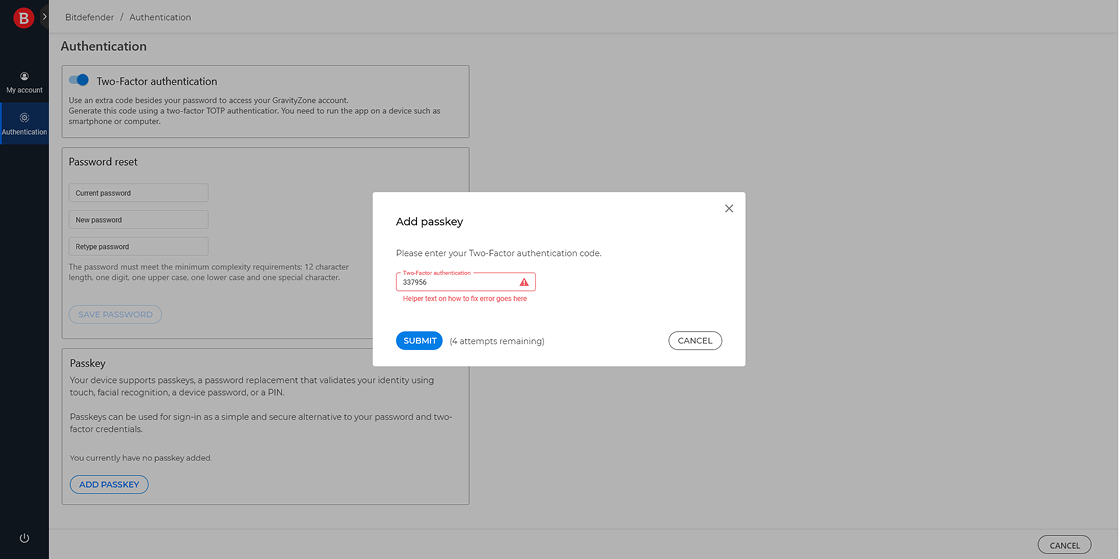
Three of us worked through feasibility, user flow, and implementation scope together: Engineering Director, Product Manager, and myself. The technology was more integration-ready than expected, which meant we could move quickly. I led the UX side, mapping the login experience, removing friction, and making biometric and PIN-based entry feel intuitive to our MSP audience.

03 - Impact

It grew beyond the MSP platform

After a successful rollout on the MSP platform, the main Bitdefender product team reached out to adopt the same pattern. Seeing something you initiated get picked up at a company-wide level is the kind of outcome that is hard to put on a Figma screen, but it is the one I am most proud of.

What I Actually Did

My contribution here sat at the intersection of research, advocacy, and design execution.

  • Tracked Passkey adoption trends for nearly a year before making the proposal, making sure the technology had proven itself elsewhere first
  • Presented the case internally, translating security benefits into user experience language the team could act on
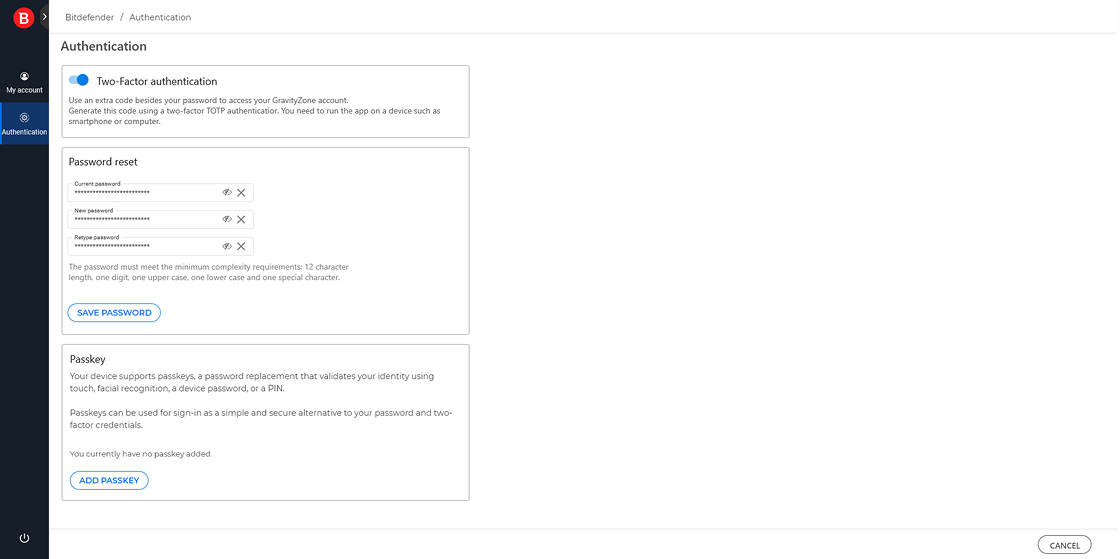
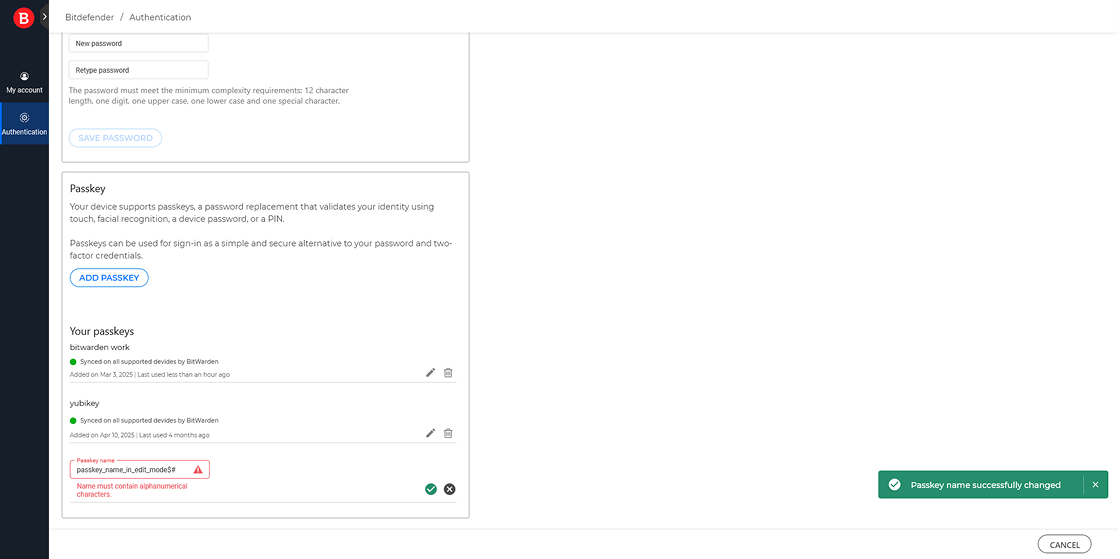
  • Designed the Passkey onboarding and login flows, focusing on reducing cognitive load and supporting multiple authentication methods (biometric, face recognition, PIN)
  • Collaborated with engineering throughout implementation to maintain the experience quality end-to-end
  • Supported the pattern being extended to the main Bitdefender platform

Going beyond the brief

The value I want to highlight here is not just a UX deliverable. It is the willingness to look beyond the sprint backlog, research something independently, build confidence in a position, and then advocate for it clearly enough that the team acts on it. That is a habit, not a one-off.

The Experience

The design goal was straightforward: make the most secure option feel like the easiest one. Users can set up a Passkey from their account settings, and the login experience collapses to a single biometric or PIN prompt.

Impact and Outcomes

MSP Platform

Passkeys shipped and live for the MSP product line

Company-Wide

Pattern adopted by the main Bitdefender platform

~1 Year

Of independent research before the proposal was made

The most meaningful result was the ripple effect. When the main Bitdefender platform team reached out to use the same pattern, it validated both the quality of the work and the value of a designer who actively monitors the industry and brings ideas to the product, not just executes on them.

What I Learned

Stepping outside your role is a skill, not a violation

There is a version of a designer who waits for the brief. This project reminded me that the most valuable contributions often start with a question nobody asked yet. The hard part is not the design. It is building enough conviction to propose something, and enough patience to wait until the timing is right.

Passkeys had been around for a while before I raised them. I made a deliberate choice to wait and observe, rather than jump on a trend. That restraint was as important as the initiative itself.

What I'd do differently: I'd involve a broader user research panel earlier, particularly MSP administrators who manage dozens of client accounts. Their authentication patterns are different from a typical end user's, and some edge cases in multi-account environments surfaced later than they should have.